A Strategic Guide to Real Estate Investment Property in Camden County
Investing in real estate in Camden County can look straightforward at first: find a property, rent it out, and build equity over time. The real work is in the details, understanding what supports rental demand, calculating expenses realistically, choosing a location that fits your strategy, and planning for the property’s upkeep when you’re not nearby.
Coastal Roots Realty helps buyers and investors navigate Southeast Georgia and Northeast Florida with local insight and hands-on guidance.
For anyone considering real estate investment Camden County, the goal isn’t simply to buy a property. It’s to understand how that property could perform, what risks come with it, and whether it fits your longer-term plans.
Camden County has several factors worth examining, including the presence of Naval Submarine Base Kings Bay, the different housing options in Kingsland and St. Marys, and the practical considerations of owning a rental from a distance.
Here’s how to approach the numbers and the local market before making a commitment.
Why Camden County Deserves a Closer Look for Real Estate Investment
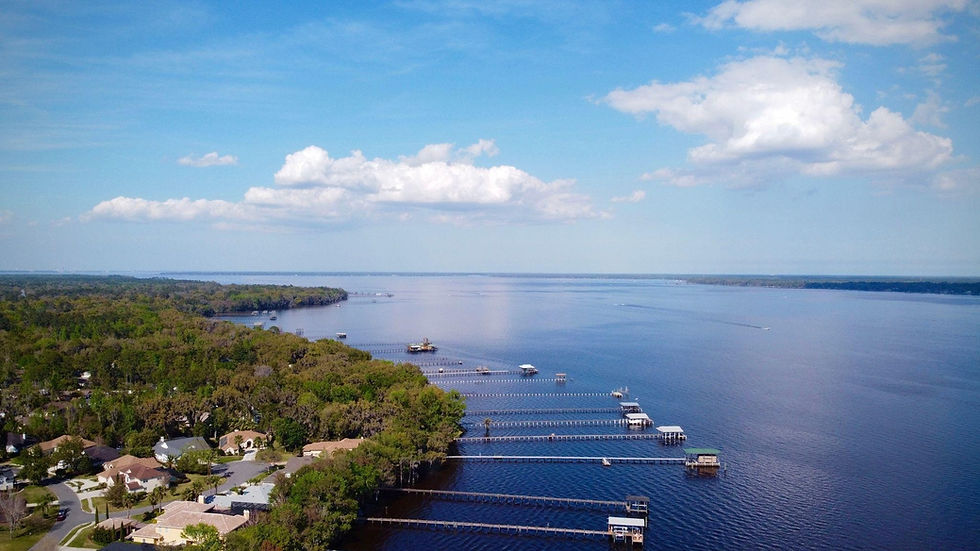
Camden County sits along Georgia’s southeastern coast, near the Florida line. Its communities offer different settings and housing types, from established neighborhoods to newer residential development. That variety can give investors more than one way to approach the market.
One important local factor is Naval Submarine Base Kings Bay. The base brings military personnel, civilian employees, contractors, and other workers to the area. Some may need rental housing during an assignment or transition, while others may seek longer-term rental arrangements. That creates a potential source of rental demand, but it doesn’t guarantee that every property will lease quickly or at a profitable rate.
For investors, the useful question is not simply whether people are moving into the county. It’s whether the property matches the rental market, including its price point, location, features, and timing.
Understand the rental demand around Kings Bay
The base is a meaningful part of the local economy, but rental demand can vary by property type and location. It may depend on factors such as commute routes, bedroom count, parking, property condition, pet policy, and monthly rent—not just distance from Kings Bay.
Before purchasing, review comparable rentals that are similar in size, condition, and location. Look at asking rents, how long listings remain available, and whether the properties appear to be actively leased. Asking rent is not the same as achieved rent, so treat listing prices as a starting point rather than a promise.
It’s also worth considering the timing of turnover. A property that attracts renters on a predictable schedule may experience periods between leases. Build that possibility into your projections instead of assuming the home will be occupied every month.
Choose a Strategy Before Choosing a Property
A strong real estate investment property begins with a clear plan. Different strategies come with different costs, risks, and management needs.
Single-family rentals
A single-family home may be a practical starting point for investors who want to own one property and learn the rental process. The layout, yard, parking, and overall condition can affect its appeal and maintenance needs.
The trade-off is that one vacancy can mean no rental income from that property until a new tenant moves in. Investors should keep enough reserves to cover the mortgage and operating expenses during that gap.
Multi-family properties
A duplex or other small multi-family property can provide more than one rent stream. If one unit is vacant, another may still generate income. That can help smooth cash flow, but it doesn’t remove risk: repairs may affect shared systems, and managing multiple units can require more coordination.
Compare the property’s total expected income with all operating costs. Don’t assume that more units automatically mean a better investment.
New construction
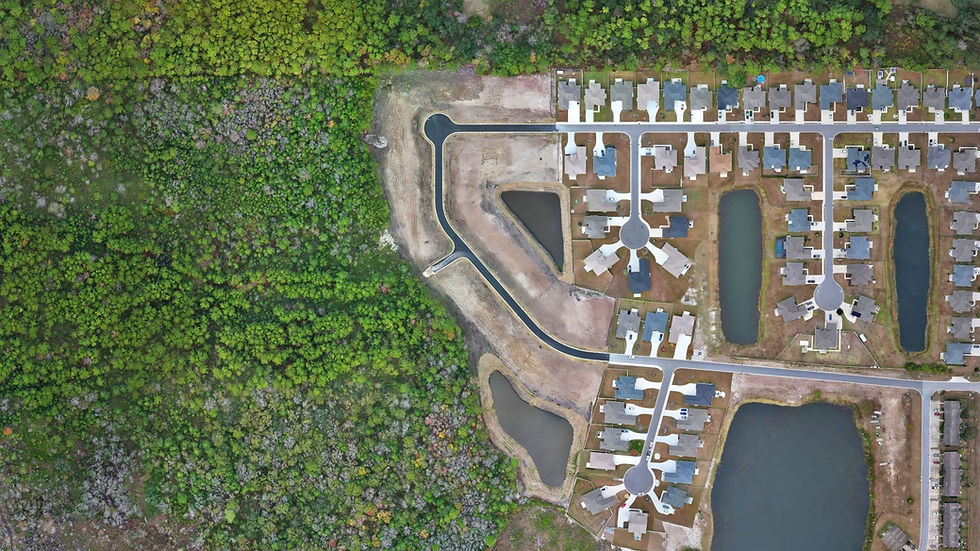
Building a rental property can allow an investor to plan the layout, finishes, and maintenance features around a specific rental strategy. But construction brings its own questions: land cost, site preparation, permitting, financing, builder schedules, utility access, and the time before rent begins.
If you’re considering a new single-family or multi-family build, make sure your budget includes both construction and the carrying costs that may accrue before the property is ready to lease.
How to Evaluate Kingsland and St. Marys

Investors often ask which areas are likely to appreciate the most. There isn’t a reliable way to name a guaranteed “most lucrative” neighborhood: appreciation depends on purchase price, property condition, local supply and demand, interest rates, and broader market conditions.
A more useful approach is to compare specific properties and neighborhoods using the same set of criteria.
Kingsland: compare access, housing, and everyday convenience
In Kingsland, examine how a property’s location relates to major roads, shopping, services, and likely commute routes. Newer subdivisions and established neighborhoods may offer different home styles, lot sizes, and maintenance considerations.
When comparing Camden County investment properties, look beyond the listing photos. Check the age and condition of the roof, HVAC system, plumbing, windows, and other costly components. A lower purchase price can lose its advantage if the property needs major repairs soon after closing.
St. Marys: consider location-specific costs and appeal
St. Marys includes areas with different access to waterfront amenities, parks, services, and routes around the county. Those features can affect rental demand, but they should be evaluated alongside the property's price and operating costs.
For properties near coastal or waterfront areas, pay attention to insurance availability and premiums, flood-zone information, drainage, and any property-specific maintenance requirements. A location’s appeal is only one part of the investment decision; carrying costs can have a substantial effect on net income.
Use comparable sales and rental data—not assumptions
To assess long-term appreciation potential, compare recent sales of similar properties and look at how prices have changed over time. Then compare those figures with realistic rent estimates and the cost of ownership.
A property that has appreciated quickly may already be priced accordingly. Another with a more modest purchase price might produce stronger rental cash flow. Neither outcome should be assumed without examining the numbers.
For real estate investing Camden County, it’s helpful to evaluate at least a few properties side by side. Use consistent assumptions for rent, vacancy, repairs, insurance, taxes, management, and financing so the comparison is meaningful.
The Cash-Flow Math: What Rent Really Leaves You

Cash flow is the money left after rental income pays the property’s operating expenses and debt obligations. A property can look profitable when you compare rent with the mortgage alone, but that leaves out several costs.
Here’s an illustrative example, not a statement of current Camden County rents or fees.
Example: A Single-Family Rental
Assume a property rents for $2,000 per month. The owner plans for one month of vacancy per year, a 10% property management fee on collected rent, and a maintenance reserve equal to 8% of collected rent.
Item | Monthly estimate |
Scheduled rent | $2,000 |
Vacancy allowance (1 month/year) | -$167 |
Expected collected rent | $1,833 |
Property management at 10% | -$183 |
Maintenance reserve at 8% | -$147 |
Taxes and insurance | -$300 |
Mortgage payment (principal and interest) | -$900 |
Estimated monthly cash flow | $303 |
This example assumes the management fee is charged on collected rent and that taxes and insurance total $300 per month. Actual expenses can be very different. It also excludes larger capital projects, such as replacing a roof or HVAC system, unless those costs are covered by the reserve.
The point is simple: the advertised rent is not the owner’s take-home income.
Property management fees and maintenance reserves
Management fees vary by company, service level, property type, and agreement. Some companies charge a percentage of collected rent; others may have flat fees or additional charges for leasing, renewals, inspections, or maintenance coordination. Ask for the complete fee schedule before you build your projections.
A maintenance reserve is separate from a management fee. It helps cover routine repairs and wear, while a capital reserve can help prepare for major replacements. The right amount depends on the property’s age, condition, systems, and risk exposure. A newer home may need less routine work in the near term, but it still needs a plan for unexpected expenses.
For a more complete estimate, include:
Property taxes and insurance
Vacancy and turnover costs
Routine repairs and maintenance
Capital replacements
Property management and leasing fees
HOA dues, if applicable
Utilities paid by the owner
Mortgage principal and interest
Any required flood or other additional insurance
A useful guide to real estate investment property should make room for the unglamorous costs. Those are often the expenses that separate a workable investment from one that strains the owner’s budget.
Using Equity from a Previous Home to Fund an Investment

Some investors use equity built in a current or former home to help finance another property. Depending on their circumstances, that may involve a cash-out refinance, a home equity loan, or a home equity line of credit. Each option has different costs, terms, and risks, and availability depends on the lender and the borrower’s financial profile.
Before using equity, consider the full effect on your finances:
Estimate the equity available. Review the home’s current value and the outstanding mortgage balance. A lender’s valuation may differ from an online estimate.
Compare financing costs. Look at interest rates, closing costs, repayment terms, and whether the rate can change.
Stress-test the rental. Calculate whether the investment can cover its expenses if rent is lower than expected or the property sits vacant.
Protect your reserves. Avoid putting every available dollar into the purchase or construction budget.
Get qualified advice. A mortgage professional, tax adviser, and financial planner can help assess how the borrowing fits your situation.
Using home equity can increase buying power, but it also increases exposure. If the rental underperforms, the debt still has to be repaid—and the home used as collateral may be at risk.
Building a Rental in Camden County: Questions to Answer First
For investors exploring new construction, start with the intended rental use and the property’s likely operating needs. A design that looks attractive on paper may be expensive to maintain or difficult to rent if it doesn’t fit local demand.
Before moving forward, confirm:
Whether the intended use is allowed on the parcel
Zoning, permitting, and any applicable development requirements
Utility availability and site-preparation costs
Builder scope, allowances, and change-order terms
A realistic timeline from purchase through completion
Financing and carrying costs during construction
Expected rent based on comparable properties
A contingency for delays and unexpected expenses
For multi-family construction, also consider parking, shared spaces, trash service, sound separation, and how maintenance will be handled. For a single-family build, durable finishes and easy-to-service systems may help reduce ongoing work.
Coastal Roots Realty can help investors evaluate the real estate side of the decision and coordinate questions with the appropriate professionals. Construction, lending, tax, legal, and insurance matters should be confirmed with the qualified experts responsible for those areas.
Real Estate Investment Properties Camden County: Why Professional Property Management Matters for Out-of-State Investors
Owning a rental from another city—or another state—can work, but distance makes reliable local support especially important. A professional property management company can help handle the recurring tasks that keep a rental operating.
Depending on the agreement, services may include marketing the property, coordinating showings, processing applications, preparing leases, collecting rent, arranging repairs, communicating with tenants, and tracking property-related activity. The scope varies, so investors should confirm exactly what is included.
Screening and leasing
A consistent leasing process can help reduce avoidable problems. Ask how the manager handles applications, screening, lease documentation, move-in inspections, and tenant communication. The process should use consistent, lawful criteria and comply with applicable fair housing and landlord-tenant requirements.
Maintenance and local coordination
When a tenant reports a leak or an appliance failure, an out-of-state owner may not be able to visit quickly. A local manager can coordinate qualified service providers and keep the owner informed, subject to the authority and spending limits in the management agreement.
Ask how emergencies are handled, whether the company uses preferred vendors, how repair estimates are approved, and what records are provided after work is completed.
Reporting and portfolio growth
Good reporting helps an investor understand how each property is performing. Look for clear statements showing income, expenses, maintenance activity, and outstanding issues. As the portfolio grows, consistent reporting can make it easier to compare properties and decide whether to hold, improve, refinance, or sell.
Management does not eliminate vacancies, repairs, or investment risk. It can, however, provide the local coordination and visibility that an out-of-state owner needs to make informed decisions without handling every task personally.
Property Investment Camden County: A Practical Checklist Before You Buy
Before making an offer on a potential investment property Camden County, work through this checklist:
Confirm realistic rent using comparable properties.
Estimate vacancy, turnover, and leasing costs.
Get insurance quotes and review property-specific risks.
Verify taxes, HOA dues, and owner-paid utilities.
Inspect the property and estimate near-term repairs.
Calculate cash flow using conservative assumptions.
Review financing terms and preserve emergency reserves.
Compare property management agreements and fee schedules.
Check zoning and permitting requirements for any planned changes or construction.
Decide what would make you sell, hold, or invest further.
The right property is not necessarily the one with the highest asking rent or the most appealing photos. It’s the one whose price, location, condition, likely income, and risks make sense for your goals.
Make Your Camden County Investment Decision with Local Guidance
Real estate investment in Camden County can offer several paths, from a single-family rental to a small multi-family property or a new build. But a sound decision starts with careful research, realistic cash-flow assumptions, and a plan for managing the property after closing.
Coastal Roots Realty is here to help you evaluate local opportunities, compare properties in Kingsland and St. Marys, and understand the steps involved in buying or investing in Southeast Georgia and Northeast Florida.
Discuss your investment goals and take a closer look at the properties and strategies that may fit your plans.